
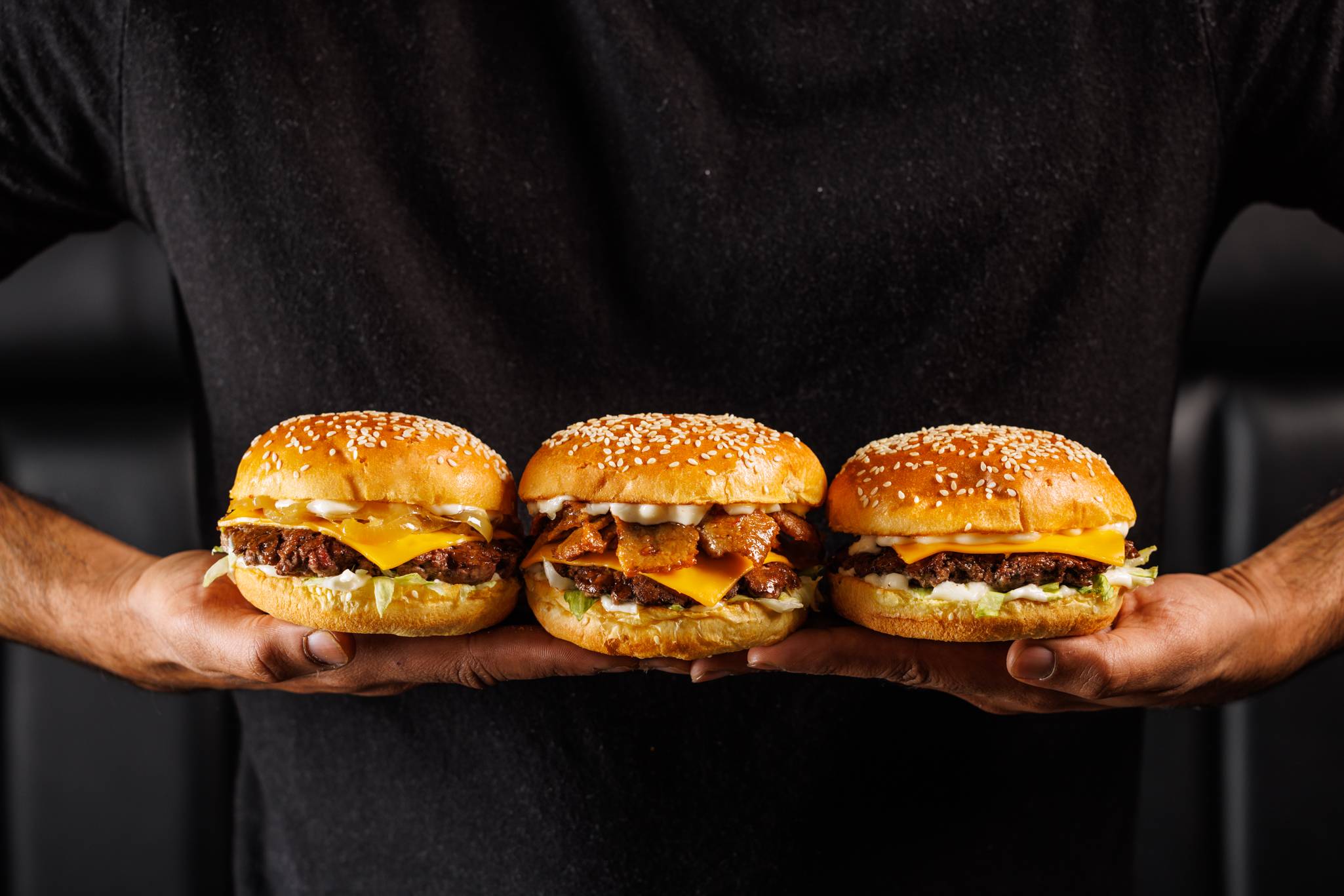
A smash burger is a ball of loose beef mince pressed thin onto a very hot surface so it sears hard on one side, building a dark, craggy crust. A regular burger is a thicker patty cooked more gently, so it stays soft and juicy the whole way through. Same beef, same bun, completely different eating experience.
Both are worth your time. Which one you want depends on whether you are after crust or bite. Here is the full comparison, and how to tell a properly made smash burger from a thin patty someone squashed by accident.
What is a smash burger?
A smash burger starts as a loose ball of mince, usually around 70 to 80g, that is pressed hard and thin onto a screaming hot pan or flat top within seconds of hitting the surface. It is cooked fast, flipped once, and topped with cheese that melts in the residual heat.
The point of the press is contact. Flattening the ball forces the maximum amount of beef against hot metal, which triggers the Maillard reaction, the browning process where amino acids and sugars react under heat to create hundreds of new flavour compounds. That is where the taste comes from. It is also why the ragged, lacy edges are the best part of the burger.
Done properly, you get a thin patty with a deep brown crust, crisp edges and a soft middle. Done badly, you get a dry grey disc. The difference is almost entirely heat and timing.

What is a regular burger?
A regular burger is a thicker, shaped patty, typically 150g or more, cooked on a grill or in a pan at a more moderate heat so the inside comes up to temperature before the outside overcooks.
Because the patty is thick, most of the cooking happens by heat travelling inwards rather than by searing. You get a softer, meatier bite and a juicier centre, but far less crust. This is the pub burger, the barbecue burger, the one you can cook to different levels of doneness.
The real difference: crust versus bite
Everything else follows from this one thing.
A smash burger is built around surface area. Thin patty, maximum contact, aggressive sear on one side, seconds on the other. The flavour is roasted, savoury and slightly crisp at the edges.
A regular burger is built around volume. Thick patty, gentler heat, cooked through evenly. The flavour is cleaner and beefier, and the texture is soft rather than crisp.
This is why two thin patties usually beat one thick one on a smash burger. You double the crust without doubling the cooking time.
Side by side
| Smash burger | Regular burger | |
|---|---|---|
| Patty | Thin, around 1cm, ragged edges | Thick, shaped, even edges |
| Heat | Very high, flat surface | Moderate, grill or pan |
| Cook time | Two to three minutes total | Six to ten minutes |
| Texture | Crisp edges, soft middle | Soft and yielding throughout |
| Flavour | Roasted, savoury, caramelised | Clean, beefy, juicy |
| Doneness | Cooked through by design | Can be cooked to preference |
| Best for | Stacking, cheese, sauces | A single substantial patty |
Beef and fat content
Fat matters more for a smash burger than almost anything else, because the fat is what fries the surface and creates the crust.
Coarse-ground chuck at around 20% fat, sometimes sold as 80/20, is the standard choice. Leaner mince produces a crumbly patty with a weak crust that dries out in seconds. A regular burger can carry slightly leaner mince because it is not relying on the sear for flavour, though 15 to 20% is still sensible.
Grind matters too. Coarse-ground beef holds a looser structure, which is what lets the patty spread into those torn edges when you press it.

Buns
Both want a soft, lightly toasted bun, but they want it for different reasons.
A smash burger needs a bun that stays low and soft, because the appeal is the contrast between crisp patty and pillowy bread. Brioche and potato rolls work well. Size the bun to the patty rather than the other way round.
A regular burger needs a sturdier bun, because a thick patty releases more juice and will collapse a weak base. Toasting the cut side is not optional either way: it forms a barrier that keeps the bottom from going soggy.
Toppings and cheese
Cheese behaves differently on each. On a smash burger it goes on the moment you flip, and the residual heat melts it almost instantly across a thin patty. Choose something that melts properly rather than a hard grated cheddar.
Smash burgers also take bolder toppings than people expect, because the crust holds its own against strong flavours. Crispy onions, jalapeños, chilli cheese and sharp sauces all work. A regular burger suits the classics: lettuce, tomato, pickles, ketchup and mustard, where the beef stays the main event.
If you want to go further, our official ranking of the 12 best burger toppings settles a few arguments, and how to build the perfect burger covers the assembly order.
Which one should you order?
Order a smash burger when you want flavour intensity, when you are stacking two or three patties, or when cheese and sauce are doing real work in the build. The Fat Ronaldo, The OG and The Monster are all built on this.
Order a regular burger when you want the beef itself to be the point, or when you want a single thick patty with a softer bite.
If you cannot decide, Billy’s Special puts a smashed patty and a grilled chicken breast in the same bun, which is one way of avoiding the question entirely.

Making a smash burger at home
The technique is simple and the margin for error is small. Loose balls, a properly preheated cast iron pan, one firm press for eight to ten seconds, season after smashing, then leave it alone until the edges go deep brown.
The two mistakes almost everyone makes are not getting the pan hot enough and pressing the patty more than once. The first gives you grey meat, the second squeezes out the fat you need for the crust.
Our full smash burger recipe walks through the mince, the equipment, the method step by step and the mistakes that ruin it. If you are feeding a crowd, how to host the ultimate halal burger night at home has the rest of the plan.
Smash burgers, done halal
Whichever style you prefer, the beef has to be right. A halal burger needs halal mince, and it needs the rest of the build to hold up too: the cheese, the sauces and the surface it was cooked on.
Every Legends store is 100% halal across the whole menu, so there is no branch-by-branch checking and no asking what the fryer has been used for. If you want the detail, our guides to what halal meat actually means and what makes a burger truly halal go through it properly.
Have a look at the full menu, find your nearest store on the stores page, or order online and take 20% off your first website order.
Frequently Asked Questions
What is a smash burger?
A ball of loose beef mince pressed thin onto a very hot surface so it sears hard and forms a dark, crisp crust. It is cooked fast, flipped once and usually topped with cheese.
What is the difference between a smash burger and a regular burger?
A smash burger is thin and pressed onto high heat for maximum crust. A regular burger is thicker and cooked more gently, so it stays soft and juicy with far less browning. Crust versus bite, essentially.
Are smash burgers better than regular burgers?
Neither is better, they are for different moods. Smash burgers win on flavour intensity and texture contrast. Regular burgers win when you want a thick, juicy patty as the centrepiece.
Why are smash burgers so popular?
The crust. Pressing the patty thin maximises contact with the cooking surface, which produces far more browning and therefore far more flavour than a thick patty ever develops.
What mince is best for smash burgers?
Coarse-ground chuck at around 20% fat. The fat fries the surface and makes the crust, so lean mince will not work.
Can a smash burger be cooked medium rare?
Not really. The patty is thin enough that it cooks through in the time it takes to build the crust. That is by design rather than a compromise.
Are Legends smash burgers halal?
Yes. Every Legends store is 100% halal across the entire menu, including all beef, chicken, cheese, sauces, fries and desserts.
